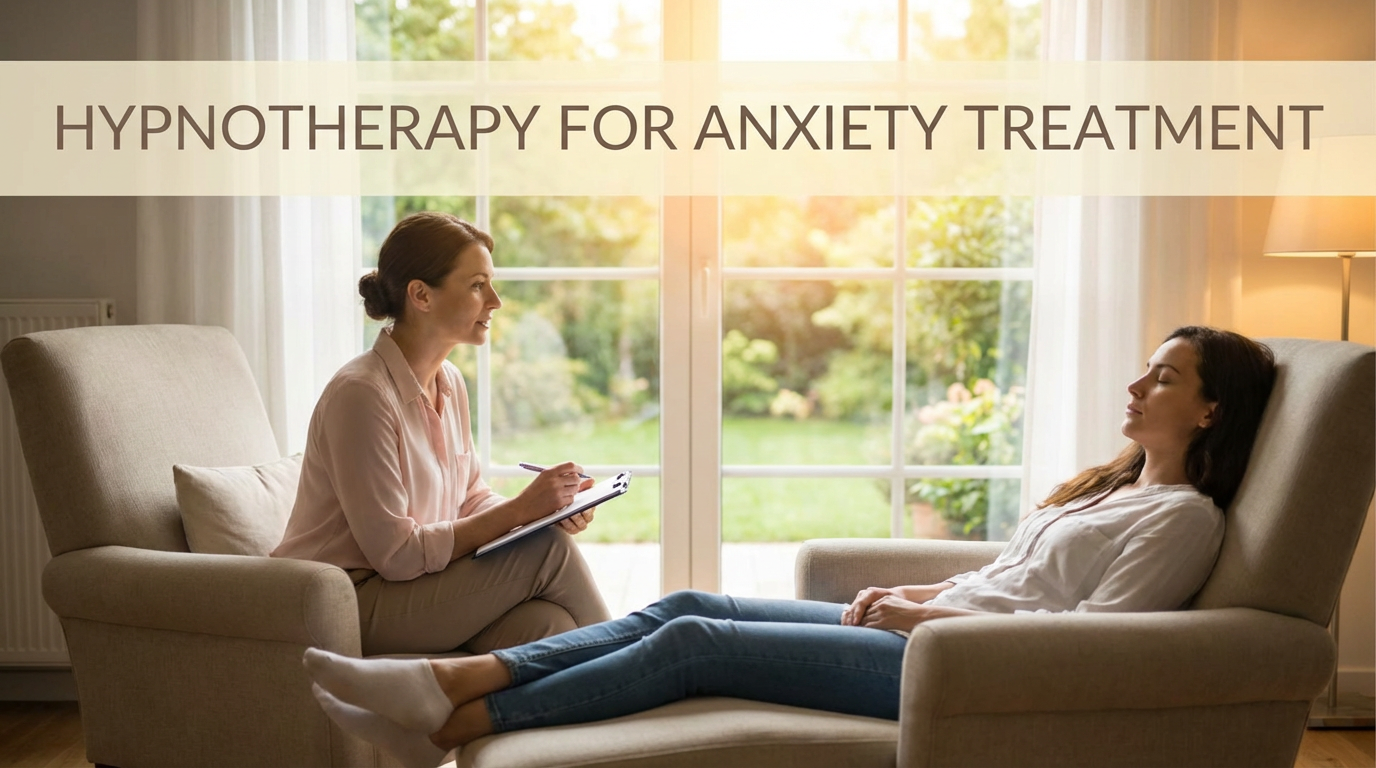
In brief: HypnoCBT (cognitive behavioural hypnotherapy) combines CBT’s structured thought-work with clinical hypnotherapy’s deeper subconscious access — and meta-analytic evidence shows the combination outperforms CBT alone (Kirsch et al., 1995; Ramondo et al., 2021). For LGBTQI+ adults, it also addresses the internalised beliefs and hypervigilance shaped by minority stress (Meyer, 2003). Most clients notice meaningful change within 6–12 sessions.
Anxiety affects millions of people across the UK, yet finding the right treatment can feel overwhelming — especially if you’re LGBTQI+ and have experienced therapy spaces that don’t fully understand your lived experience. HypnoCBT offers an evidence-based alternative that combines the structured techniques of cognitive behavioural therapy (CBT) with the deeper reach of clinical hypnotherapy, addressing anxiety at both the conscious and subconscious levels. Ready to find out whether it’s right for you? Book a free 15-minute consultation and take the first step today.
What is HypnoCBT?
HypnoCBT — sometimes written as Hypno-CBT or cognitive behavioural hypnotherapy — is an integrative therapy that combines two well-established psychological approaches:
| Component | What it does | How it works |
|---|---|---|
| Cognitive behavioural therapy (CBT) | A structured, goal-oriented therapy that identifies and challenges unhelpful thought patterns, beliefs and behaviours contributing to anxiety | Provides the logical framework for understanding why you think and react the way you do |
| Clinical hypnotherapy | A therapeutic technique using guided relaxation and focused attention to access the subconscious mind, where deeply held habits, beliefs and emotional responses reside | Allows insights to take root at a deeper level — reprogramming automatic responses and reinforcing healthier patterns |
When used together, these modalities create a synergy that neither achieves alone.
Does HypnoCBT actually work? What the evidence says
The British Psychological Society recognises cognitive behavioural hypnotherapy as an evidence-based approach, and clinical hypnotherapy is recognised by the Royal College of Psychiatrists. The research base includes:
| Study | Finding |
|---|---|
| Kirsch, Montgomery & Sapirstein (1995) | The classic meta-analysis: clients receiving CBT plus hypnosis improved more than at least 70% of those receiving CBT alone |
| Ramondo et al. (2021) | Meta-analysis confirming statistically significant benefits of adding hypnosis to CBT, including for anxiety, low mood and chronic pain |
| Rosendahl et al. (2024) | A 20-year meta-analytic review finding hypnosis effective across mental and somatic health issues |
| Tudor-Sfetea & Topciu (2024) | Systematic review confirming LGBTQ-affirmative CBT significantly improves mental health in sexual- and gender-minority adults |
How does HypnoCBT work for anxiety?
Anxiety operates on multiple levels. On the surface, you may recognise anxious thoughts — catastrophising, worst-case thinking, relentless worry. Beneath that, your nervous system may be stuck in hypervigilance, triggering fight-or-flight responses even in safe situations. HypnoCBT addresses both layers simultaneously.
What happens at the conscious level?
During the CBT component of treatment, you work with your therapist to identify negative automatic thoughts that fuel anxiety (such as “Something terrible is going to happen” or “I can’t cope”); challenge and reframe those thoughts using evidence-based techniques, replacing them with balanced, realistic perspectives; and develop practical coping strategies including behavioural experiments, graded exposure and problem-solving skills. This structured work gives you a clear understanding of your anxiety triggers and equips you with tools to manage them in daily life.
What happens at the subconscious level?
Once cognitive patterns have been identified, hypnotherapy deepens the work. During a hypnotherapy session, you enter a state of focused relaxation — similar to the feeling just before you fall asleep — while remaining fully aware and in control throughout. In this receptive state, your therapist can access deep-rooted beliefs and emotional memories that drive anxiety responses; introduce positive suggestions aligned with the healthier thought patterns developed during CBT; rehearse calm, confident responses to anxiety-triggering situations through guided visualisation; and regulate the nervous system, teaching your body to shift from fight-or-flight into a calmer baseline state.
| Standard CBT alone | HypnoCBT | |
|---|---|---|
| Level of work | Conscious thoughts and behaviours | Conscious and subconscious — both at once |
| What changes | You understand your anxiety differently | Changes are not just understood but felt at a fundamental level |
| Typical result | Insight, sometimes without lasting shift | Faster, more durable relief (Kirsch et al., 1995) |
Who does HypnoCBT help?
HypnoCBT is effective for a wide range of anxiety-related conditions, including:
- Generalised anxiety disorder (GAD): persistent, excessive worry about everyday situations
- Social anxiety: fear of being judged or embarrassed in social or professional settings
- Health anxiety: overwhelming worry about illness or physical symptoms
- Panic attacks: sudden, intense episodes of fear with physical symptoms such as racing heart, shortness of breath and dizziness
- Phobias: intense, irrational fears of specific objects, situations or activities
- Performance anxiety: nervousness related to public speaking, exams or workplace demands
- Insomnia and sleep disturbances: difficulty falling or staying asleep due to an overactive mind
Beyond specific conditions, HypnoCBT is particularly well suited to people who have tried traditional talking therapy without achieving lasting results; want a structured, time-limited approach rather than open-ended sessions; are looking for techniques they can practise independently between sessions; or prefer an approach grounded in scientific evidence rather than abstract theory.
How does HypnoCBT support LGBTQI+ adults specifically?
If you’re LGBTQI+, anxiety often carries additional layers. Minority stress — the cumulative psychological impact of navigating a world not designed with you in mind (Meyer, 2003) — can significantly affect mental health through internalised stigma (absorbing negative societal messages about your identity, even when you consciously reject them); coming-out stress (the ongoing process of deciding when, how and whether to disclose your identity); hypervigilance (constantly scanning environments for potential judgment, hostility or exclusion); and microaggressions and discrimination (repeated experiences of being misunderstood, misgendered or marginalised).
| The layer | What it looks like | How HypnoCBT addresses it |
|---|---|---|
| Internalised stigma | Absorbed negative messages, even when consciously rejected | Hypnotherapy reaches the internalised beliefs that insight alone rarely shifts |
| Coming-out stress | Ongoing decisions about disclosure across settings | CBT builds discernment and decision frameworks; hypnotherapy reduces the automatic threat response |
| Hypervigilance | Constant environmental scanning for judgment or hostility | Nervous-system regulation resets the baseline; subconscious work updates what the system expects |
| Microaggressions & discrimination | Repeated experiences of being misunderstood or marginalised | Affirming CBT validates the reality while building resilience and repair |
Standard anxiety treatments often overlook these factors. HypnoCBT, delivered within an affirming therapeutic space, addresses them directly. At The Holistic Clinic, our practitioners have both professional expertise and personal understanding of LGBTQI+ experiences — you won’t need to educate your therapist on the basics of your identity; you can move straight into the therapeutic work that matters. Read more at How We Help and What is HypnoCBT?.
What can you expect from HypnoCBT treatment?
How is a HypnoCBT programme structured?
A typical programme at The Holistic Clinic includes:
- Initial assessment: understanding your history, current difficulties and therapeutic goals.
- Psychoeducation: learning how anxiety works in the brain and body, so you understand the rationale behind each technique.
- CBT skills training: developing thought reframing, behavioural activation and exposure planning strategies.
- Hypnotherapy integration: reinforcing cognitive changes at the subconscious level through guided relaxation and visualisation.
- Self-practice tools: receiving recorded hypnotherapy sessions and written exercises to use between appointments.
- Review and consolidation: tracking progress and adjusting the approach as needed.
How many sessions will I need?
Most clients begin to notice meaningful changes within 6 to 12 sessions. HypnoCBT is designed to be time-limited and goal-focused — you won’t be attending weekly sessions indefinitely. The aim is to equip you with lasting skills and strategies so you become, in effect, your own therapist.
Which practical techniques are used in HypnoCBT?
| Technique | What it involves | What it changes |
|---|---|---|
| Thought reframing | Catching negative automatic thoughts and examining them objectively — evaluating evidence for and against, rather than swapping negative for positive | Reduces the frequency and intensity of anxious thinking until balanced appraisal becomes automatic |
| Nervous-system regulation | Diaphragmatic breathing, progressive muscle relaxation and body-scan exercises | Downregulates the sympathetic (fight-or-flight) response and activates the parasympathetic (rest-and-digest) system, so your body returns to calm faster after stress |
| Exposure planning | Gradually and systematically confronting feared situations, starting with less challenging scenarios and building up | Reverses the avoidance that reinforces anxiety — and hypnotherapy rehearsal (visualising yourself handling the situation calmly beforehand) makes exposure significantly less daunting |
Is clinical hypnotherapy in the UK legitimate? Dispelling common myths
Clinical hypnotherapy in the UK is a legitimate, evidence-based practice — yet misconceptions persist:
| The myth | The reality |
|---|---|
| “You’ll lose control” | Hypnotherapy is not mind control. You remain fully aware throughout, cannot be made to do anything against your will, and can end the session at any time |
| “It’s like stage hypnosis” | Clinical hypnotherapy has nothing to do with entertainment shows — it is a structured therapeutic process conducted by trained professionals |
| “It isn’t recognised” | It is recognised by the Royal College of Psychiatrists, and qualifications from institutions such as the UK College of Hypnosis & Hypnotherapy are accredited by the British Psychological Society |
| “It conflicts with other treatment” | HypnoCBT can complement medication, mindfulness practices and other therapeutic approaches you may already be using |
Frequently asked questions about HypnoCBT
Is HypnoCBT suitable for severe anxiety? HypnoCBT can be beneficial across a range of anxiety severities. During your initial consultation, your therapist will assess whether it’s the most appropriate approach for your situation and may recommend additional support if needed.
Will I lose control during hypnosis? No. Hypnotherapy involves a state of focused relaxation, not unconsciousness. You remain aware, in control, and able to stop the process at any time.
Can HypnoCBT help with anxiety caused by past trauma? Yes. The hypnotherapy component can gently access and process past experiences that contribute to current anxiety, whilst CBT provides the framework for understanding and managing trauma responses. For complex trauma, your therapist may integrate additional approaches.
How is HypnoCBT different from standard CBT? Standard CBT works primarily at the conscious, cognitive level. HypnoCBT adds the dimension of subconscious processing, which can accelerate change and make therapeutic gains more durable — meta-analyses show clients receiving CBT plus hypnosis outperform at least 70% of those receiving CBT alone (Kirsch et al., 1995).
Do you offer LGBTQI+ affirming therapy? Absolutely. The Holistic Clinic specialises in affirming, inclusive support for LGBTQI+ individuals. Our practitioners understand the specific challenges you face — including minority stress — and create a safe, respectful therapeutic environment. The NHS also provides dedicated mental-health guidance for LGBTQ+ people.
Take the next step: book your free consultation
Choosing to address anxiety takes courage — and choosing the right therapist matters. At The Holistic Clinic, we offer a complimentary 15-minute consultation so you can speak with an experienced, affirming therapist; discuss your goals and concerns openly; learn how HypnoCBT could work for you specifically; and decide whether our approach feels like the right fit. There’s no obligation and no pressure.
Prefer to start by mapping your own patterns? Try the free LGBTQI+ Anxiety Self-Assessment. And for a structured, self-paced introduction to the method, explore Beyond Survival: A Practical Guide to LGBTQI+ Anxiety.
Book your free 15-minute consultation now — available online or in person across London and the UK.